Linear guides
for smooth and reliable motion
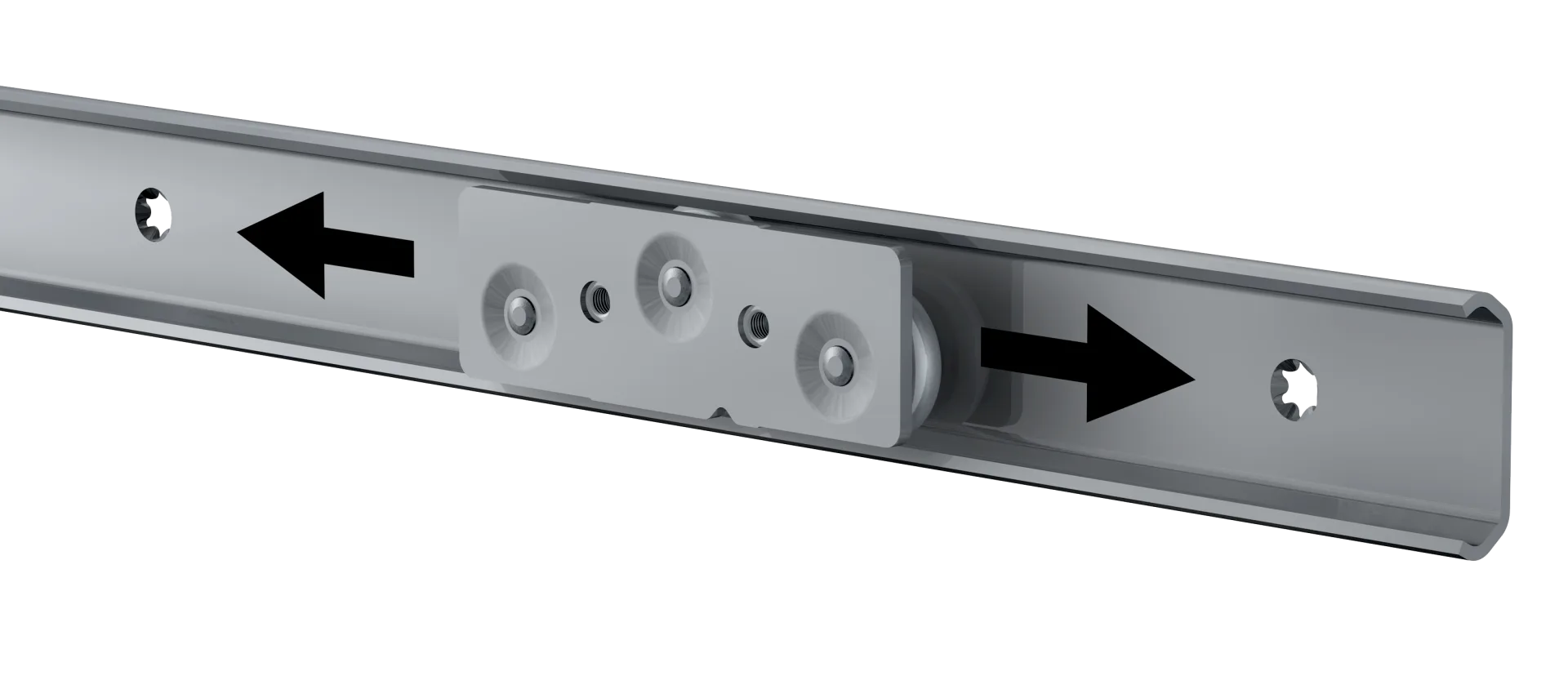
Linear guides are essential components in applications that require accurate, smooth, and controlled linear movement. They provide low-friction guidance for moving parts while maintaining high load capacity, rigidity, and positioning accuracy.
At Thomas Regout International, we develop and manufacture high-quality linear guide solutions designed to meet the demands of industrial automation, machinery, medical equipment, transportation systems, and many other applications where reliable linear motion is critical.
Typical linear guide applications
Unlike telescopic slides, which are primarily designed for extending drawers and compartments, linear guides are engineered for precision motion in machinery and automation systems, such as vending, kiosk and self service machines, CNC machines, robots, pick and place equipment and sliding doors where smooth movement, high load capacity, and long service life are essential.
How do linear guides improve motion control?
Linear guides are designed to deliver smooth, controlled, and precise linear motion. By minimizing friction while maintaining stability and rigidity, they improve the performance, efficiency, and reliability of linear motion systems across a wide range of industrial applications.
Using rolling elements or precision-engineered contact surfaces, linear guides provide accurate guidance even under demanding operating conditions. The result is consistent motion, reduced wear, and a longer service life for both the guide and the complete system.
Key benefits of linear guides
- Reduced friction and wear
- High positioning accuracy
- Smooth and controlled motion
- High load capacity
- Increased system reliability
- Long service life
- Low maintenance requirements
Linear guide performance and mounting orientation
One of the greatest advantages of linear guides is their flexibility. Depending on the application, they can be mounted horizontally, vertically, or diagonally. Each mounting orientation influences how loads are transferred through the guide system and should therefore be considered during the design phase.
Selecting the correct orientation helps optimize load distribution, positioning accuracy, motion performance, and overall service life.

Horizontal linear guides
Horizontal mounting is the most common configuration for linear guide systems. In this orientation, the guide primarily carries radial loads while providing smooth, stable, and low-friction motion.
Horizontal linear guides are widely used in:
- Industrial automation
- Packaging machinery
- Machine building
- Medical equipment
- Material handling systems
- Storage and access solutions
Their excellent load distribution and smooth operation make them ideal for applications with frequent cycling and continuous operation.

Vertical linear guides
Linear guides can also be mounted vertically for applications involving lifting or lowering movements. Since gravity continuously acts on the moving load, vertical applications place different demands on the guide system than horizontal installations.
When designing a vertical linear guide system, engineers should evaluate:
- Static and dynamic load capacity
- Acceleration and deceleration forces
- Drive system performance
- Holding mechanisms
- Safety factors
Typical applications include:
- Vertical lift systems
- Height-adjustable workstations
- Medical devices
- Automated storage and retrieval systems (AS/RS)
- Robotic positioning systems
A properly selected linear guide ensures safe, stable, and accurate vertical motion while maximizing service life.

Diagonal linear guides
Diagonal installations combine the characteristics of both horizontal and vertical motion. In these applications, the guide system is subjected to a combination of radial, axial, and moment loads.
Typical applications include:
- Machine guarding
- Access systems
- Industrial automation
- Material handling equipment
- Custom machinery
Because forces act in multiple directions, diagonal applications often require careful engineering to achieve the desired stiffness, rigidity, and positioning accuracy.
Any questions about the correct orientation for your application, contact our Sales Managers
Meet the FlexFit
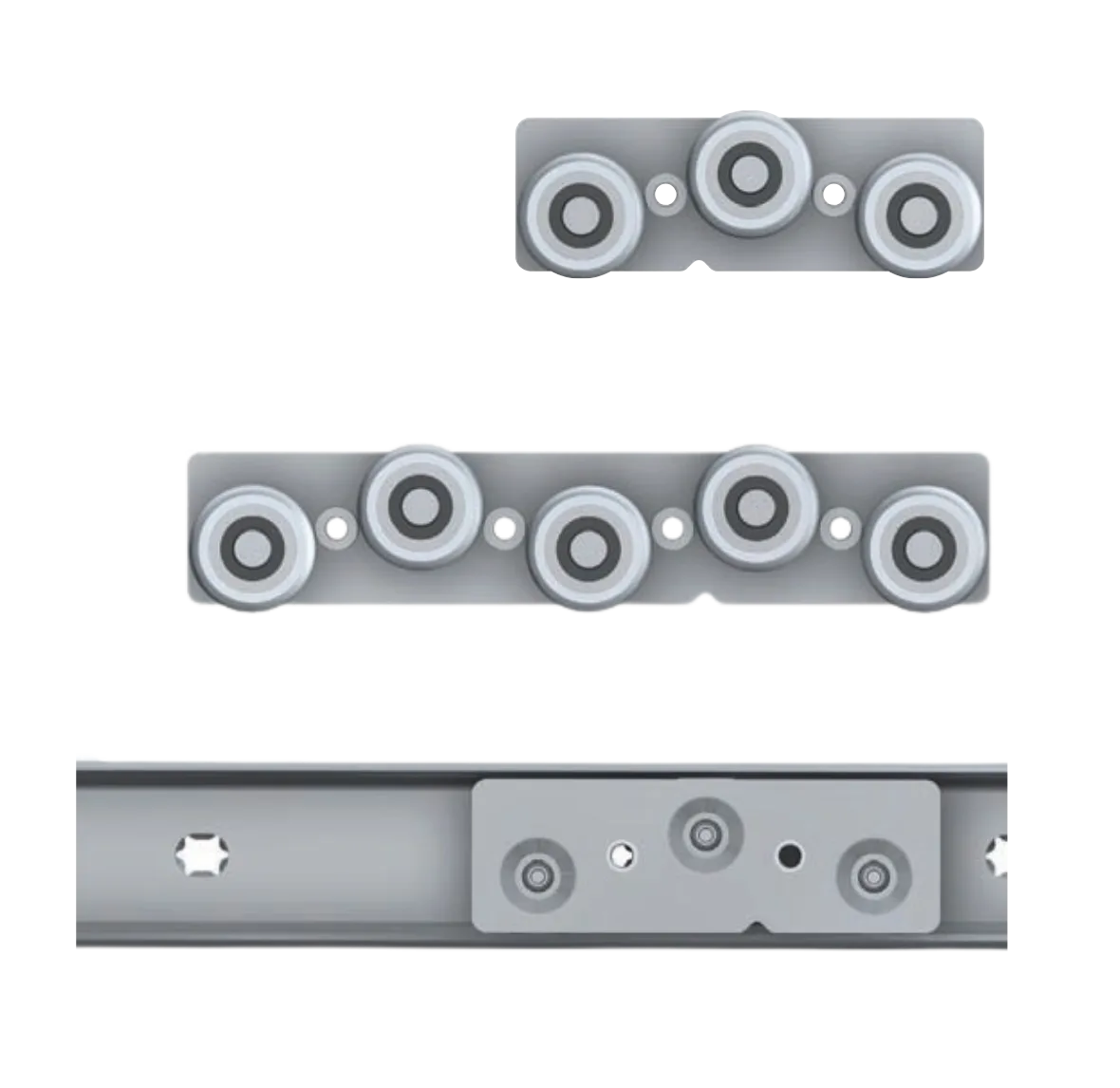
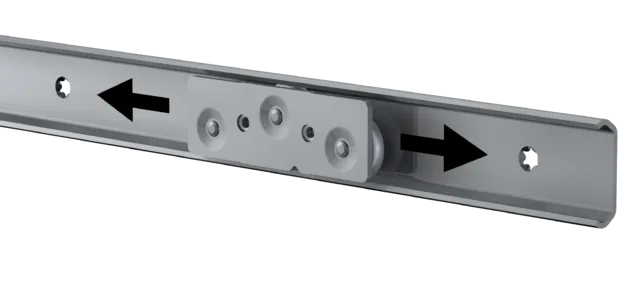
The FlexFit is a self-aligning, cost-effective linear guide that combines a cold-formed profile with a roller guide carrier to deliver smooth, reliable, and versatile linear motion. Designed for easy and fast installation, FlexFit offers multiple motion options and can be mounted horizontally, vertically, or diagonally, making it suitable for a wide range of industrial applications.
Unlike many conventional linear guide systems, FlexFit is supplied as a ready-to-use solution. The self-aligning carrier requires no adjustment during installation, reducing assembly time and simplifying system integration. Available in multiple sizes and load capacities, FlexFit provides engineers with a flexible solution that combines smooth movement, long service life, and excellent value for money.
Why Choose FlexFit?
- Ready to use product (no adjustment of the carrier needed)
- Easy and fast installation
- Customized fixations possible
- Excellent price-to-performance and competitive value for money
- Smooth movement
Design your custom linear guide solution today
Every application has unique requirements. That's why we offer customized linear guide solutions tailored to specific performance, dimensional, and environmental demands.
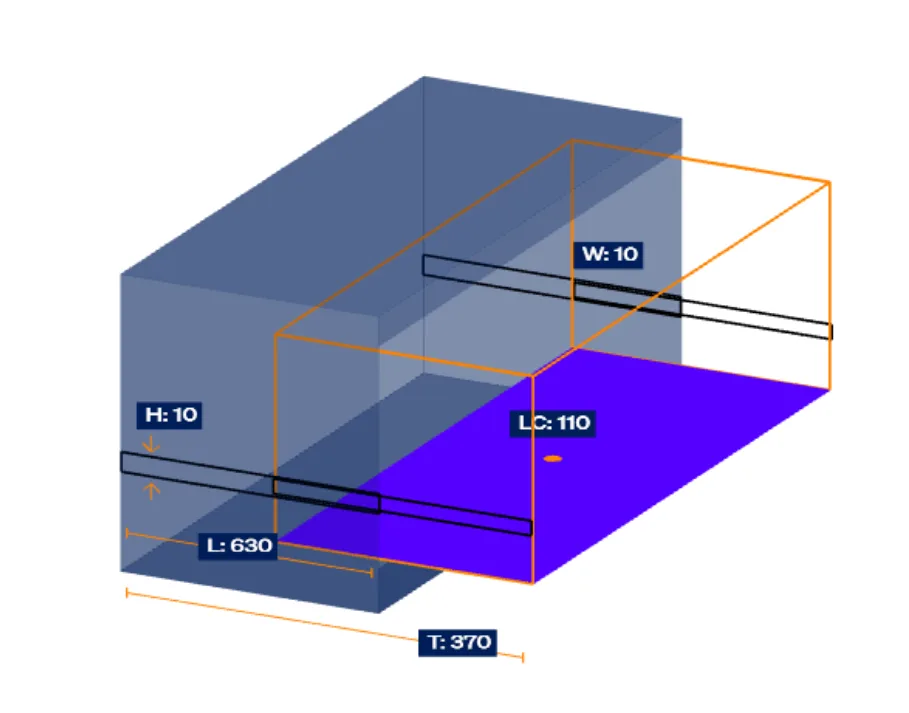
To simplify the customization process, we provide an intuitive online configurator that enables customers to define their application requirements quickly and efficiently. By combining customer input with our engineering expertise, we develop linear guide solutions that precisely match the technical and operational demands of each application.
Our expertise includes:
- Custom stroke lengths
- Application-specific materials (stainless steel 304 and zinQproteQ®)
- Corrosion-resistant solutions
- High-load designs
- Compact installation concepts
Ready to find the ideal linear guide for your application? Use our online configurator to specify your requirements and receive a solution tailored to your needs.
Not able to find the right information? Try our FAQ
What are linear guides used for?
Linear guides ensure smooth and controlled linear motion in a wide variety of applications. They are commonly used in vending machines, machine enclosures, sliding doors, industrial equipment, special-purpose vehicles, and storage systems where reliable and precise movement is required.
What are the advantages of linear guides?
Linear guides combine the guide rail and carriage in a compact, ready-to-install solution. Key advantages include smooth operation, easy installation, long service life, low maintenance, and suitability for various load capacities and applications.
Can linear guides be mounted vertically, horizontally, and diagonally?
Yes. Our FlexFit linear guides are designed for reliable use in horizontal, vertical, and diagonal mounting positions. This flexibility allows designers and engineers to use them in a wide variety of applications while ensuring smooth and reliable operation.
Can linear guides be customized?
Yes. In addition to our standard product range, we offer customized linear guide solutions for specific application requirements. Our engineering team will support you with individual dimensions, mounting options, material selection, and integrated motion systems that are precisely tailored to your project.
How do I choose the right linear guide?
Selecting the appropriate linear guide depends on various factors, including load capacity, installation position, available installation space, travel distance, environmental conditions, and expected service life. Our specialists will be happy to assist you in finding the optimal solution for your technical requirements.
Use our product selector to identify the most suitable linear guide for your application and performance requirements.
What load capacity do I need for a linear guide?
The required load capacity depends on the weight of the moving components, operating conditions, acceleration forces, and expected service life. Choosing a guide with sufficient load capacity is essential for safe operation and long-term performance.
What is the difference between a linear guide and a telescopic slide?
Linear guides are primarily designed for precise, controlled motion and high positioning accuracy. Telescopic slides are designed to provide extension and access, often allowing a moving element to extend beyond its installed length.